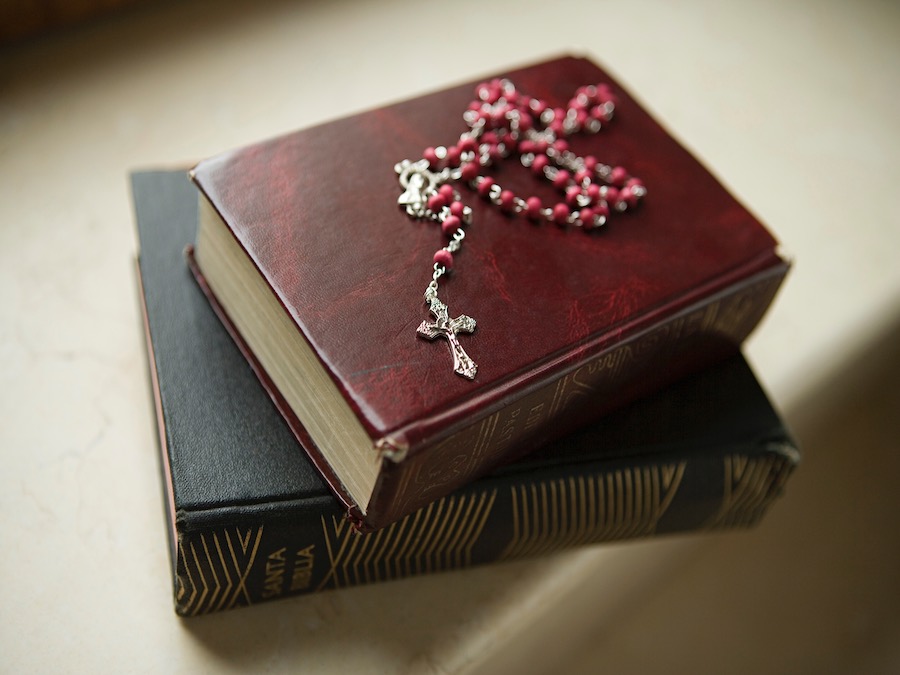
This is a great question. The Catholic Bible includes the Apocryphal books. These are books written primarily during the 400 silent years between the closing of the Old Testament and the coming of Christ. The early church did not consider them part of the Bible. They officially became part of the Catholic Bible in 1546 when the Roman Catholic Church voted, at the Council of Trent, to include them as Scripture. For the 1,500 years before this, they were not regarded, by the church, as Scripture. We are naturally repulsed by the idea of people creating words from God. According to the Protestants, we can only recognize the authority of the books God gave, we can not vote to convey authority to a book or letter that it doesn't have. For example, if we held a letter we believed to be from Abraham Lincoln, the Protestant Church believes we could only examine it to see fi it has the qualities of a letter from Lincoln. Does the ink date to the right time? Is the signature a match? We try to recognize the letter's authority. On the other hand, the Roman Catholic Church believes they convey authority. They take a vote and therefore make the letter from Lincoln. Following this analogy, this would allow the Roman Catholic church to add to the Bible, by vote, what was never part of the Bible for 1,500 years. This is the essence of the rub between Catholicism and the Protestants when it comes to the Bible. The Catholic Church believes it creates the Bible and has authority over it. The Protestant Church believes we only recognize the books God gives to the church and it is the authority over us. It is the explanation for why in 1546, after 1,500 years, the Catholic Bible suddenly became thicker. Why do the Protestants continue to reject these books as authoritative? Jesus and other New Testament authors cite 295 quotations from the Old Testament yet none of them are from the apocryphal books. Even though the Jews of Jesus day were fully aware of the apocryphal books, they never accepted them as Scripture. The earliest Christian list of Old Testament books by Melito, bishop of Sardis, from 170 A.D. names no apocryphal books as accepted Scripture. There was no disagreement between Jesus and the Jewish leaders that additions to the canon of Scripture had ceased after Ezra, Nehemiah, Esther, Haggai, Zechariah and Malachi. There are doctrinal and historical inconsistencies in a number of the apocryphal books. For a more thorough explanation, see Wayne Grudem's Systematic Theology.